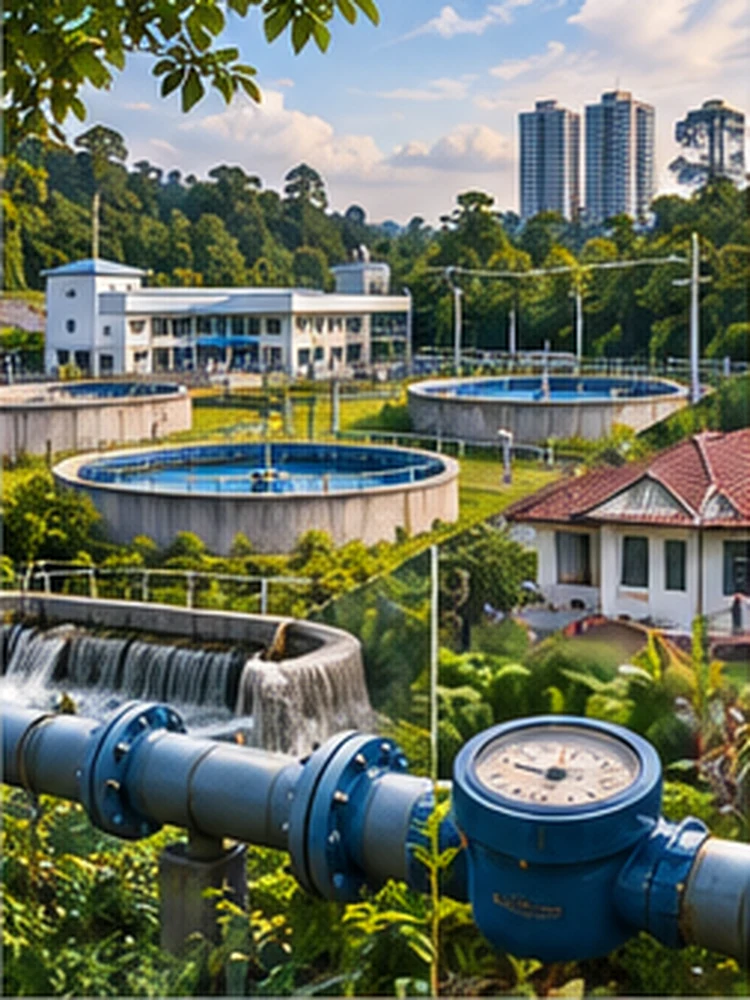
Why was 34.3% of water non-revenue?
Non-revenue water is not simply the volume physically leaking from pipes.
Out of every 100 units of water entering the network
A proportional illustration using the 2024 NRW rate of 34.3% cited in a 2026 parliamentary reply. It is not simply a physical pipe-leakage rate.
units of non-revenue water
units of billed authorised consumption
NRW can also reflect meter errors, unbilled authorised use and commercial losses. This percentage is not a measure of drinkable water.
What NRW means
A written parliamentary response in 2026 cited the 2024 non-revenue water (NRW) rate of 34.3% from SPAN's Water and Sewerage Fact Book. NRW measures the gap between system input and billed authorised consumption. It may include physical leaks, meter problems, unbilled uses and commercial losses.
Why the figure matters
Treated water carries pumping, energy and treatment costs whether or not it is billed. NRW reduction therefore requires network audits, pipe maintenance, accurate metering and better accounting rather than one simple intervention.
Coverage caveat
The cited rate is a SPAN reporting figure, not a universal leak percentage for every state. Check the original report's geographic coverage before comparing Sabah or Sarawak against the stated aggregate.
Think of 100 units entering the system
At the 2024 NRW rate of 34.3%, a 100-unit illustration represents 34.3 units that do not generate billed revenue and 65.7 units that do, under that definition. It illustrates the percentage; it is not a measured volume for a particular treatment plant or a statement about drinkable water.
A target is not a current result
A 2026 written parliamentary reply cites a 28.8% NRW target for 2030 and says the official 2025 rate was still being finalised by SPAN when the reply was provided. The target is a policy objective, not an achieved result and not the physical leakage rate of every state.