
Skip to content

MALAYSIA HISTORY · CHAPTER 05

After Malaysia's formation: the people's journey from 1965 to 1999.

Malaysia's early decades brought change: Singapore's separation, challenges to social cohesion, economic policies, education, regional development and political reform.

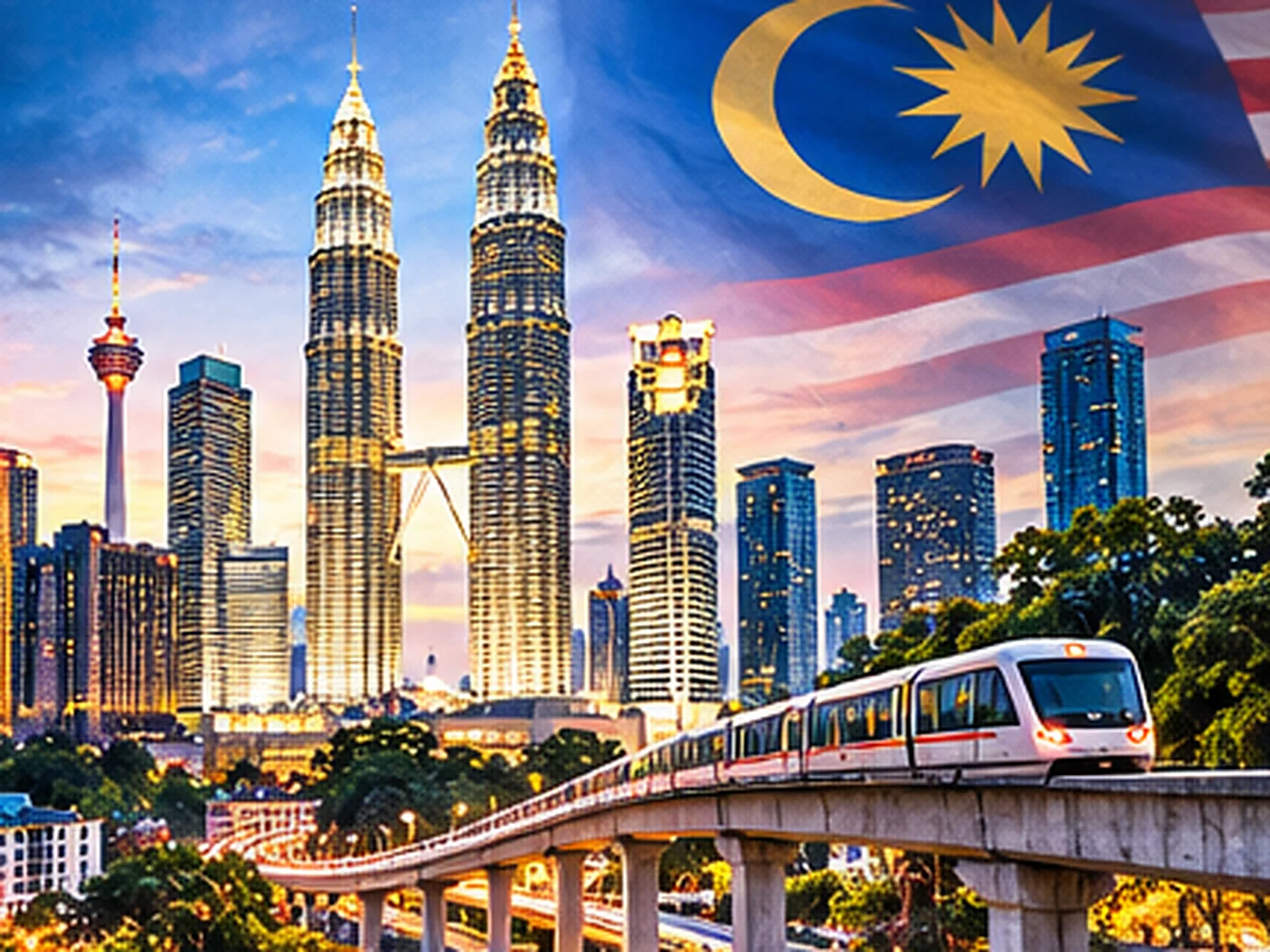
AI concept illustration of Kuala Lumpur towers and urban rail representing late twentieth-century development; not a historical photograph.
AI CONCEPT ILLUSTRATION18 sourced records
FIRST RECORD IN THIS CHAPTER9 August 1965Malaysia and Singapore

Singapore separates from Malaysia

AI-generated illustration of development after 1963, not a photo of a specific year or milestone. Urban progress shown here does not imply equal outcomes for people across the peninsula, Sabah and Sarawak.
PULSEKITA / HISTORY TIMELINE

The history behind each documented moment

CHAPTER 05
9 August 1965Singapore separates from Malaysia

Malaysia and Singapore

1 / 18 records

Only source-backed milestones appear here. Approximate periods remain approximate; these are not documentary reconstructions. Open the full event for evidence and interpretation limits.

Policy launch ≠ measured success

Singapore's separation in 1965, the 13 May violence, economic policy and industrial development had different consequences for different people. Treat dates, regions, policy goals and outcomes separately.

SECTION 01

Federation, crisis and unity

Nation-building faced Singapore's separation, the 1969 violence and new efforts at unity.

9 August 1965Malaysia and Singapore

Singapore separates from Malaysia

Singapore separated from the Federation of Malaysia on 9 August 1965, following an agreement signed on 7 August. The two governments continued as separate states, altering the federation created in 1963.

Review sources and interpretation limits1 sources

Evidence type: historical records and official documents

Interpretation limit: The 7 August signature differs from entry into force on 9 August. Singapore's separation did not dissolve Malaysia or undo Sabah and Sarawak's 1963 participation.

13 May 1969Kuala Lumpur and affected areas

13 May violence tests safety and social cohesion

Following the 1969 election, communal violence erupted on 13 May, causing deaths. An emergency was declared and the National Operations Council (MAGERAN) assumed emergency administrative functions. Victims' experiences and contested causal interpretations warrant care.

Review sources and interpretation limits1 sources

Evidence type: historical records and official documents

Interpretation limit: Do not repeat unverified casualty totals or attribute collective blame to any ethnic group. Government records outline the official response, not every victim's experience.

18 May 1970Kuala Lumpur · UKM's first operations

UKM expands Malay-medium higher education

Universiti Kebangsaan Malaysia was established on 18 May 1970 and began in Lembah Pantai. Its establishment followed a long movement to expand Malay-medium higher education after independence.

Review sources and interpretation limits1 sources

Evidence type: historical records and official documents

Interpretation limit: Malay-medium instruction at UKM did not mean all universities or students used one language alone. Language policy and education access evolved over time.

31 August 1970Malaysia-wide

The Rukun Negara is proclaimed

The Rukun Negara was proclaimed on 31 August 1970 following the events of 13 May. It outlines goals of unity, justice and democracy alongside five national principles.

Review sources and interpretation limits1 sources

Evidence type: historical records and official documents

Interpretation limit: Proclamation expressed national aspirations, not proof that every social division ended in 1970. Outcomes must be assessed separately.

SECTION 02

Development policies and institutions

Education, economic policy, energy and industry changed lives unevenly across regions.

1971–1990Federal policy affecting all states

New Economic Policy reshapes poverty and restructuring policies

The New Economic Policy framed development from 1971 to 1990, aiming to reduce poverty and restructure economic participation. Implementation and its effects varied across regions and communities.

Review sources and interpretation limits2 sources

Evidence type: historical records and official documents

Interpretation limit: These are policy goals, not evidence that every target was achieved or all citizens benefited equally. Bumiputera communities in Sabah and Sarawak have different economic circumstances.

1974Malaysia · petroleum across multiple regions

PETRONAS formed within national petroleum arrangements

PETRONAS was established in 1974 under the Petroleum Development Act framework to manage national petroleum resources. Petroleum policy shaped development, public revenue and federal–state relationships, including producing states such as Sabah, Sarawak and Terengganu.

Review sources and interpretation limits2 sources

Evidence type: historical records and official documents

Interpretation limit: The Act and PETRONAS describe federal arrangements; state rights, taxes and petroleum payments involve distinct legal histories. Do not imply every federal–state question was settled.

6 June 1976Sembulan, Kota Kinabalu · Sabah

Double Six tragedy kills Sabah leaders

The Double Six aircraft crash on 6 June 1976 killed Sabah Chief Minister Tun Fuad Stephens and other leaders. It deeply affected victims' families and state administration; the final investigation report was subsequently made public.

Review sources and interpretation limits1 sources

Evidence type: historical records and official documents

Interpretation limit: A 2024 parliamentary reply says the final report declassified in 2023 attributed the crash to human error, not sabotage or technical failure. Conspiracy claims must not be presented as facts.

16 July 1981Kuala Lumpur · before Putrajaya was developed

Mahathir becomes Malaysia's fourth Prime Minister

Dr Mahathir Mohamad began his first term as Malaysia's fourth Prime Minister on 16 July 1981. His administration pursued industrialisation and infrastructure while facing debates over institutions and political authority.

Review sources and interpretation limits1 sources

Evidence type: historical records and official documents

Interpretation limit: A prime-ministerial appointment is a dated administrative fact, not a verdict on a leader's achievements or failures. Individual policy effects need separate evidence.

9 July 1985Shah Alam · Selangor

The Proton Saga launches as national car

The Proton Saga was officially launched on 9 July 1985 after PROTON's incorporation in 1983. The national-car project aimed to develop automotive manufacturing, employment and local supplier networks.

Review sources and interpretation limits2 sources

Evidence type: historical records and official documents

Interpretation limit: Early Saga vehicles relied on Mitsubishi technology: they were not wholly locally designed or manufactured in 1985. Consumer and industry outcomes require separate assessment.

1988Kuala Lumpur · federal judiciary

Judicial crisis raises institutional independence questions

The 1988 judicial crisis involved actions against Lord President Tun Salleh Abas and Supreme Court judges. It became a central episode in debates over executive–judicial relations and institutional independence.

Review sources and interpretation limits1 sources

Evidence type: historical records and official documents

Interpretation limit: Legal scholars assess its causes and implications in different ways. Describe the removals and judicial-independence debate without implying unanimous legal interpretations.

SECTION 03

Regional institutions and new visions

Higher education in Sarawak and Sabah expanded alongside industry and technology ambitions.

28 February 1991Kuala Lumpur · national policy vision

Vision 2020 is presented

Mahathir's 28 February 1991 address, 'Malaysia: The Way Forward', proposed reaching developed-country status by 2020, combining economic goals with wider social and institutional aspirations.

Review sources and interpretation limits1 sources

Evidence type: historical records and official documents

Interpretation limit: A vision is an aspiration at its launch, not proof that all targets were reached by 2020. Outcomes need independent social and economic measures.

24 December 1992Sarawak · Kota Samarahan and Kuching

UNIMAS is established in Sarawak

Universiti Malaysia Sarawak was incorporated on 24 December 1992 and welcomed its first students in 1993. It expanded tertiary education and research opportunities across multiple disciplines in Sarawak.

Review sources and interpretation limits1 sources

Evidence type: historical records and official documents

Interpretation limit: Establishing a university did not instantly remove cost, distance or access barriers for rural communities. Indigenous and interior-region access requires separate evidence.

24 November 1994Sabah · Kota Kinabalu

Universiti Malaysia Sabah expands higher-education access

Universiti Malaysia Sabah was established on 24 November 1994 as Malaysia's ninth public university. Its programmes and campuses developed in stages, expanding higher-education opportunities in Sabah.

Review sources and interpretation limits1 sources

Evidence type: historical records and official documents

Interpretation limit: The founding of a campus does not demonstrate that all education gaps across Sabah, Labuan or rural districts disappeared. Access depends on transport, costs and community conditions.

1996; launch speech on 1 AugustKuala Lumpur–Putrajaya–Cyberjaya–Sepang corridor

Multimedia Super Corridor frames a digital agenda

The Multimedia Super Corridor was launched in 1996 to attract technology investment, create skilled jobs and develop the digital economy, initially focused on a defined geographic corridor.

Review sources and interpretation limits2 sources

Evidence type: historical records and official documents

Interpretation limit: A technology corridor's launch is not proof of equal digital access across all states and districts. Rural areas, Sabah and Sarawak experienced different connectivity trajectories.

SECTION 04

Financial turmoil, civil society and change

The late 1990s tested the economy, politics and rights as national administration evolved.

1997–1998Malaysia-wide · Asian financial crisis

Asian financial crisis affects livelihoods and the economy

The regional financial turmoil beginning in 1997 significantly affected Malaysia in 1998. Bank Negara Malaysia reported a 6.7% GDP contraction and 83,865 retrenchments during 1998.

Review sources and interpretation limits1 sources

Evidence type: historical records and official documents

Interpretation limit: These BNM figures apply to specific definitions and year; they are not total poverty counts or all affected jobs. Recovery differed between households.

September 1998 and thereafterKuala Lumpur and civil-society networks

The Reformasi movement reshapes political debate

Following Anwar Ibrahim's removal as Deputy Prime Minister in September 1998, demonstrations and the Reformasi movement expanded. Academic research examines the roles of students, opposition parties, NGOs and debates over rights and governance.

Review sources and interpretation limits1 sources

Evidence type: historical records and official documents

Interpretation limit: Participants' allegations against political leaders and motives for protest require attribution, not presentation as adjudicated fact. The movement involved varied groups and demands.

9 September 1999Malaysia · national human-rights institution

SUHAKAM established by an Act of Parliament

The Human Rights Commission of Malaysia was established under Act 597, gazetted on 9 September 1999. Its inaugural meeting took place in April 2000, creating a new human-rights institution.

Review sources and interpretation limits1 sources

Evidence type: historical records and official documents

Interpretation limit: Creating a commission did not resolve all rights complaints or give it the powers of a court. Its statutory mandate and limits must be understood separately.

1999; Federal Territory from 2001Putrajaya · formerly Prang Besar, Selangor

Federal administration begins moving to Putrajaya

Federal government administration began relocating to Putrajaya in stages in 1999, including the Prime Minister's Office at Perdana Putra. Putrajaya subsequently became a Federal Territory on 1 February 2001.

Review sources and interpretation limits2 sources

Evidence type: historical records and official documents

Interpretation limit: Putrajaya became the federal administrative centre; Kuala Lumpur remained the national capital. Relocation from 1999 differs from its 2001 Federal Territory declaration.

People's histories extend beyond projects and Cabinets

National policies and landmark projects affected daily life unevenly across Sabah, Sarawak, cities, rural districts, factory workers, farmers, indigenous communities, students and victims' families. This chapter distinguishes launch dates from measured results, and policy aims from economic, rights and educational outcomes.

Bank Negara Malaysia ↗ · Universiti Malaysia Sarawak ↗ · Universiti Malaysia Sabah ↗ · SUHAKAM ↗

WHAT COMES NEXT

Chapter 6 · Malaysia in the 21st Century

Explore 2001–2026: development, disasters, elections, the pandemic, voting rights and the digital economy.

Read Chapter 6: Malaysia in the 21st Century →
Every milestone includes sources and interpretation limits. Policy dates and statistics do not imply equal results for every community.